
About a year ago, Grape Nuts and Cheerios went GMO free. Remember the cheers of joy that went up across the country? While it may be a great thing that…
Read More
Research shows that Americans are consistently eating healthier than they were ten years ago. People have cut their intake of trans fat, and all you have to do is walk through your nearest supermarket to see the plethora of foods with labels advertising, “organic,” “gluten free,” and “non-GMO” foods. Access to organic foods is increasing, as is nutritional labeling–and people are paying attention.
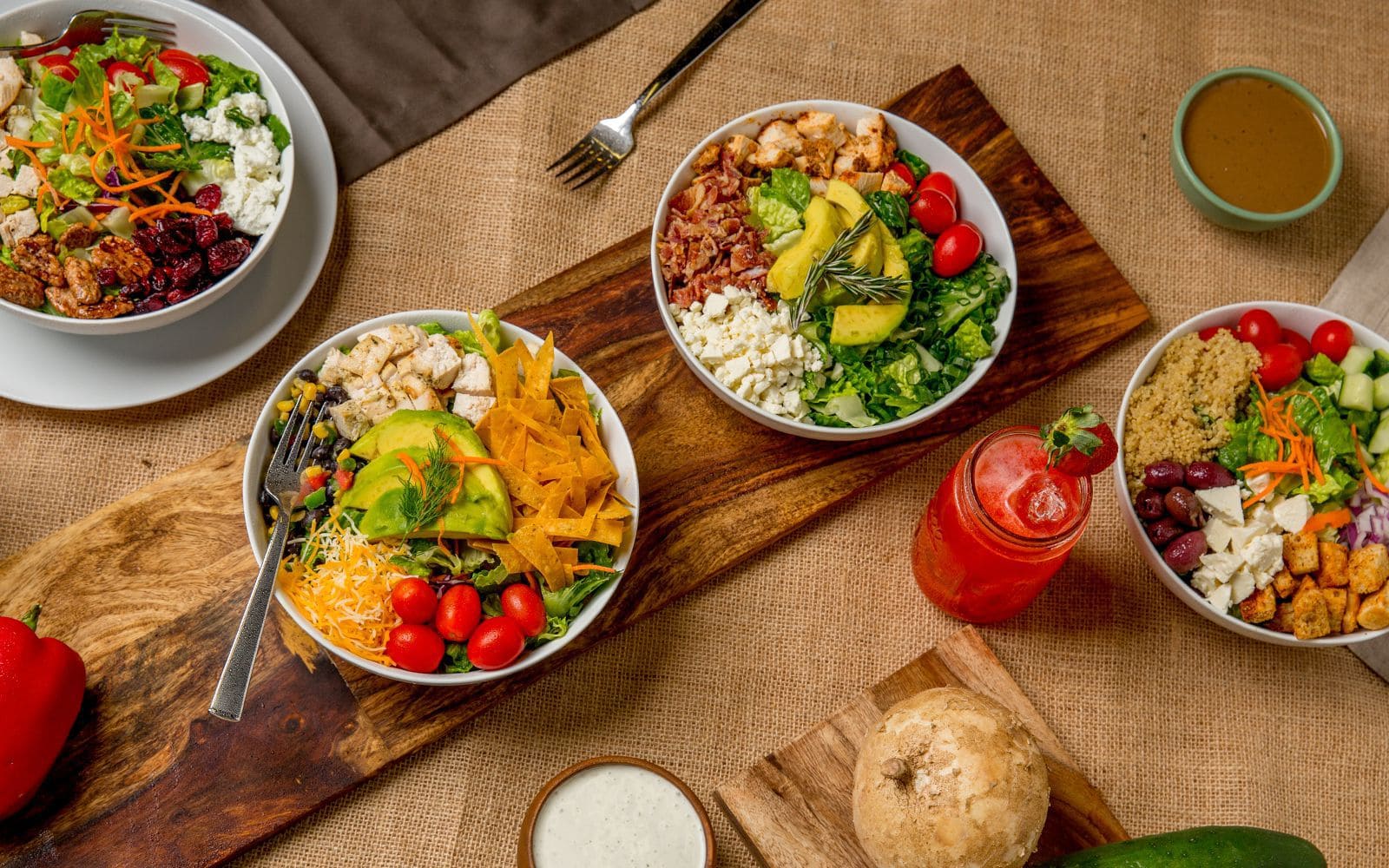
We see it every day at Brown Bag. People come to see us because they’re looking for a healthy alternative to fast food. They want fresh meals made on the spot, not sitting under a heat lamp, and that’s what we give them. From our large selection of salad toppings and greens options, you can build your own salad or choose from one of our signature salads. We have a variety of sandwiches and paninis on our menu, but patrons are welcome to design their own masterpieces as well. Our Noodle Bowls are also popular, and available with several different sauces, as well as fresh vegetable options and meats. In addition, patrons can choose gluten-free options like rice or quinoa or our gluten-free noodles. And that’s just lunch!
Our breakfast offerings are a departure from the usual grab-n-go breakfast sandwich. We offer omelets made on the spot, bagels, fresh muffins, yogurt,fruit, and more. We’ve paired up with Swing’s Coffee, local DC-area coffee masters, to offer our customers a superior coffee experience with the benefit of healthy breakfast options. And what we see in our Brown Bag restaurants every day is growth. People want fresh, healthy food–but they still want it fast.
Our restaurants are located in urban locations surrounded by busy office workers, tourists and residents, and we’ve learned exactly how to give them what they want when they want it. We’ve designed our stores to make ordering as efficient and user-friendly as possible through the use of touch-screen kiosks. After ordering, patrons wait while their meal is prepared fresh, right in front of them. Checkout is a breeze with the Brown Bag app, as well. Simply link a credit or debit card to your app, and quickly scan your phone to move on through checkout. The app also tracks loyalty points and lets customers know when they’ve earned rewards.
Brown Bag prides itself on its locally-sourced ingredients and its commitment to the environment through recycling, using paper products that are biodegradable and compostable, and purchasing wind power, when available, to run our stores. We know we’re not the only ones who care about taking care of the planet because we hear about it in our restaurants all the time. People like dining somewhere they don’t have to feel guilty about– in any way. Being environmentally responsible is a foundation of Brown Bag, but it’s also a bonus to the people who eat here.
We’re on the move, and ready to keep growing! In 2014, two new Brown Bag restaurants have opened in the DC area, and we are poised for more. Check out our franchise page to download our franchise kit and find out how you can get involved in Brown Bag! The world is ready and waiting for a fresh, healthy food option that moves as fast as the people ordering. Why not be the one who brings it to them?
We often hear people lamenting, around this time of year, how much weight they gain over the holidays. They bemoan the feasts, the Christmas cookies, the endless parties and their limitless buffets. Let’s face it, the holiday season is full of food; but instead of letting it break your calorie bank or throw you off the healthy bus you’ve been trying to ride, how about trying to make holiday meals and dishes as low-fat and healthy as they can be? As with most culinary conundrums, we approach the holiday season’s food parade with enthusiasm and a sense of adventure. You want your meal to give a nod to tradition but cut fat and still be delicious, huh? Challenge accepted!
In respect to tradition, let’s talk about mashed potatoes and green bean casseroles. To some people, these are holiday meal staples, must-haves, if you will. If you’ve been watching what you eat and trying to cut processed foods, eat fresh and local, etc., then both of these dishes present major challenges. Let’s attack the green beans first, shall we? Our first decision is to cut out the canned green beans. They don’t taste as good, anyway, so we say opt for fresh, whenever available. Now, onto the Cream of Mushroom Soup? Do you have any idea how much sodium is in canned soup? Too much. Our answer: Avocado Cream of Mushroom Soup! Sure, it’s green, and you’re not used to that, BUT your green beans are also green–it will all blend! When you swap the traditional Campbell’s Cream of Mushroom for this avocado recipe, you’re trading fatty, heavy cream and butter for the super-healthy fats and creaminess of avocados (and trust us–that avocado gives the soup a creaminess that is lovely!)! Calories cut, sodium cut, fresh produce consumed!
Now, onto the mashed potatoes. Mashed potatoes, while seriously delicious, are also big on the cream and butter. Consider these options instead: adding roasted garlic for a little extra kick of flavor, and substituting low-fat milk or Greek yogurt for the cream. You’ll still get the creaminess (promise!), but you won’t get all the fat! Another secret weapon: cauliflower! Who knew, right? Steam your cauliflower, then puree it and stir it right into the mashed potatoes. It’s delicious and adds more healthy goodness to your recipe! People will be asking what you did to the potatoes this year with a smile, not a grimace–promise!
And how about those Christmas cookies? One simple tip: Replace fats with oils. Did you know that two dozen cookies made with 1 cup of butter have 5 grams of fat per cookie? It doesn’t always work to replace all of the butter with oils, but many people report having good luck when they replace half the butter. Another option: Replace some of the fats with pureed fruits, like applesauce or pumpkin. Sometimes when you replace butter, shortening, etc. with options like oil, the cookies will be dry, so you might consider using plain yogurt or non-fat buttermilk, as well. You can add some fiber to your cookies with whole wheat flour, whole wheat pastry flour, oats or ground flax seed. If you’re concerned about the texture, give the whole-wheat pastry flour a try!
There are lots of small ways to reduce calories and fat during the holidays without making yourself feel deprived. A simple internet search can turn up a plethora of new options, as well as ideas for substitutions that you can play around with.
We’ll keep whipping up all of your favorites here at Brown Bag throughout the holiday season. We’re happy to keep our fresh salads, sandwiches and soups coming–fast!– while you navigate this busy time of year. Cuisine on the fly is what we’re all about!

Traditionally, Thanksgiving has been all about the turkey, but consider for a moment the possibility of other birds (inside of birds, inside of birds…). Have you been introduced to the turducken? A turducken is a de-boned chicken stuffed inside of a de-boned duck stuffed inside of a de-boned turkey (see how the name incorporates the whole delicious thing?!). We know–it sounds like a unicorn, right? Or a mermaid. Some creature so fantastical that it couldn’t possibly exist, but it does; and we are here to tell you that it is delicious!
No one’s quite sure exactly who invented it, but we know it originated in South-Central Louisiana (it was, and still is, sold in specialty-meat stores). There is some evidence that this little culinary, fairytale beast found its American origins in a meal that was created in a Creole restaurant in New Orleans, but the practice of stuffing a bird into a bird into a bird into a bird (and so on…) can be traced back to Europe and even Rome.
What lends even more Thanksgiving-like beauty to the turducken are the layers of stuffing between the birds. Each layer is padded with it! Stuffings can vary, but traditional New Orleans turduckens usually consist of three different stuffings–a cornbread stuffing, a rice stuffing, and an oyster-based stuffing. Some chefs recommend an all-meat stuffing, such as sausage or paté, to help balance the flavors and keep the shape of the birds (I have personally tasted one stuffed with Crawfish Étoufée, and it was divine).
Now, if you are lucky enough to get your hands on a turducken (and most likely you’ll have to order it in advance, if you’re not brave enough to tackle this beast on your own), you can cook it the same way you cook your usual Thanksgiving turkey: roasted, fried, etc. Some people complain that the turkey in turducken is usually dry and overcooked, and that makes sense, as you need to cook poultry to a certain temperature to ensure it’s safe to eat; but by the time you get the chicken to the right temp, the turkey is much higher, and therefore drier. Another problem: The “bird” comes out looking nothing like a bird. It loses its shape due to the boneless ingredients. A dry turkey that doesn’t look like a turkey? It may be tricky-tricky to get your guests to open up to that.
The best advice and instruction we found came from “The Food Lab” at Serious Eats. If you’re feeling ambitious this year, you really have to read J. Kenji Lopez-Alt’s piece about creating the perfect turducken. There is some serious research at work here.
This author asserts that the best way to cook a turducken evenly (without drying out the turkey or duck), is to cook each bird separately (to a degree). He uses a combination of poaching and browning to not only get the birds cooked perfectly (and safely), but also to get the duck skin nice and crispy. Not only that, but he gives clear directions on how to truss up your birds to get your final product to look like an actual turkey instead of a misshapen lump of clay.
So, here’s the question: Do you want to be known as the fairytale queen of the turducken kingdom or are you happy with being the master of the just-one-bird turkey universe? One thing is for sure: Turducken is a serious commitment to your Thanksgiving meal. Think it might be worth it?